Threat-informed defense means prioritizing what you test based on who actually threatens you. The hard part has always been the research-to-test gap: you read a threat report, then spend days translating it into something you can run. Cyllex collapses that gap by shipping the intelligence and the techniques together.
The APT Codex
Built into Cyllex is a threat-actor knowledge base — profiles for major groups across Russia, China, North Korea, Iran and financially motivated crews. Each profile carries aliases, targeted sectors, signature techniques, associated malware, operational history, and links into MITRE ATT&CK. It's context and capability in one place, so you're not jumping between threat reports and your testing tool.
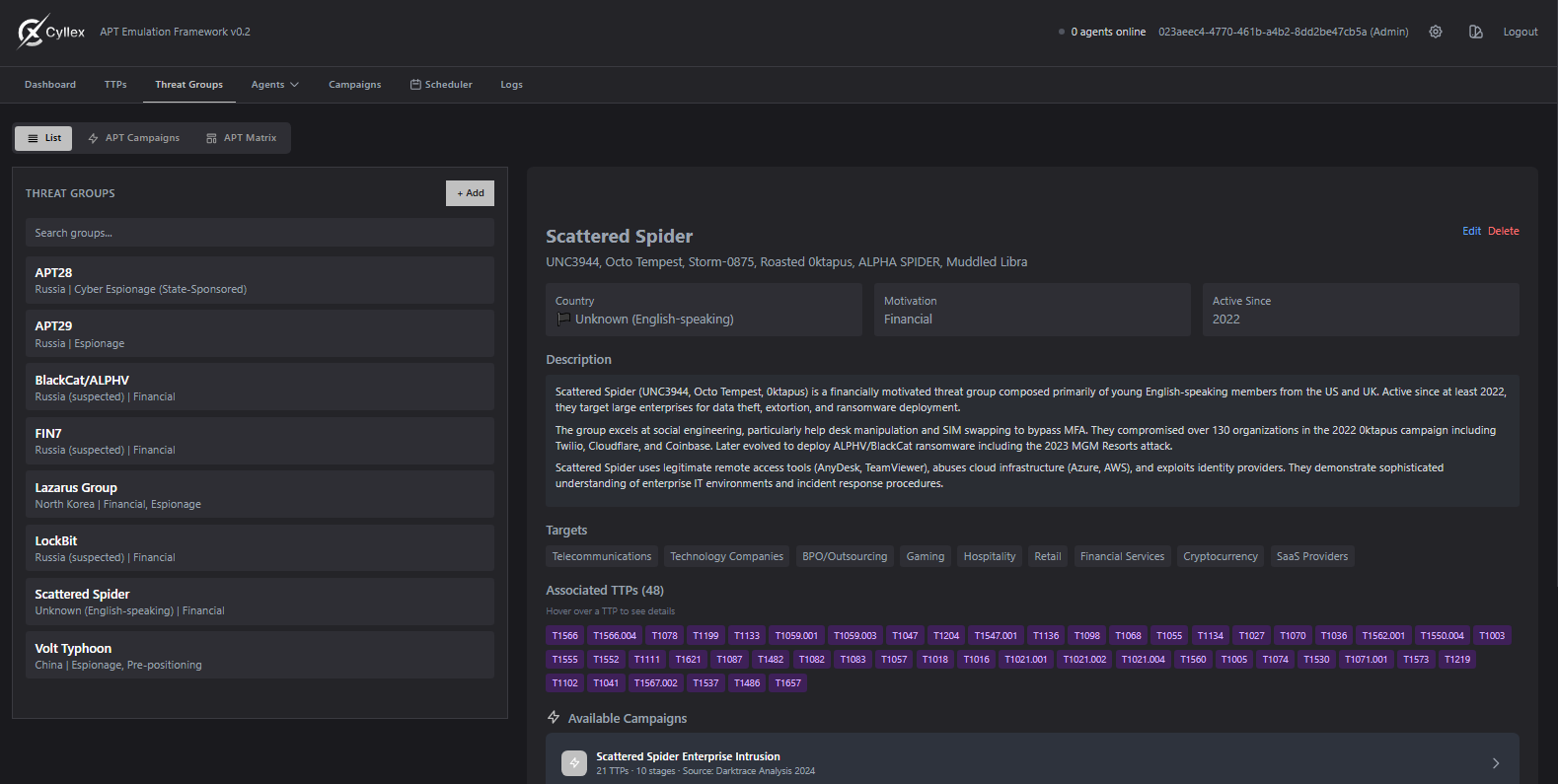
From Profile to Playbook
Pick a group — say APT29 or MuddyWater — and Cyllex maps it straight to its documented techniques. You get the who and the why, then turn it into action: emulate the group as a campaign, running their techniques in sequence to simulate a realistic intrusion, or cherry-pick individual techniques to validate specific detections.
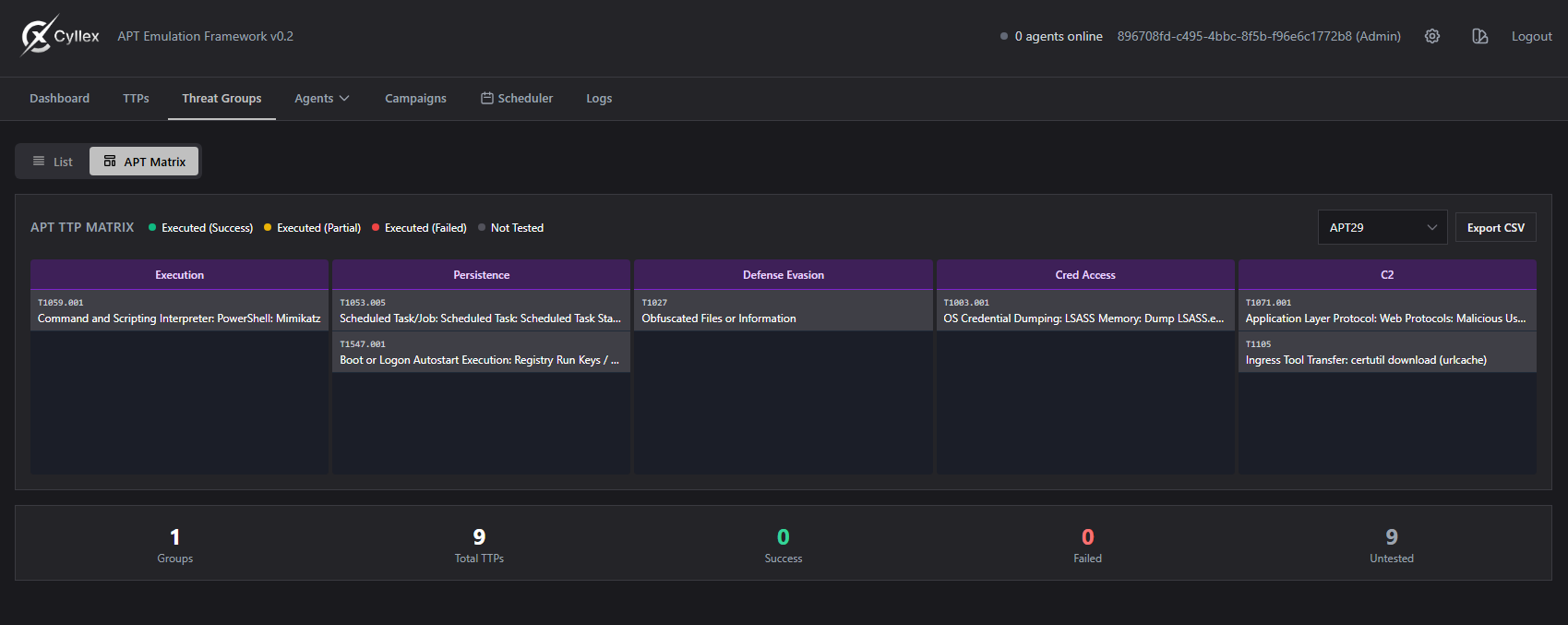
Reporting in Adversary Terms
Because every technique feeds the detection loop, the output isn't just "12 of 18 techniques detected." It's "against this threat actor's playbook, here's where you're covered and here's where they'd slip through." That framing turns an engagement into a conversation a CISO can act on — and it maps cleanly onto coverage matrices and the maturity/compliance views.
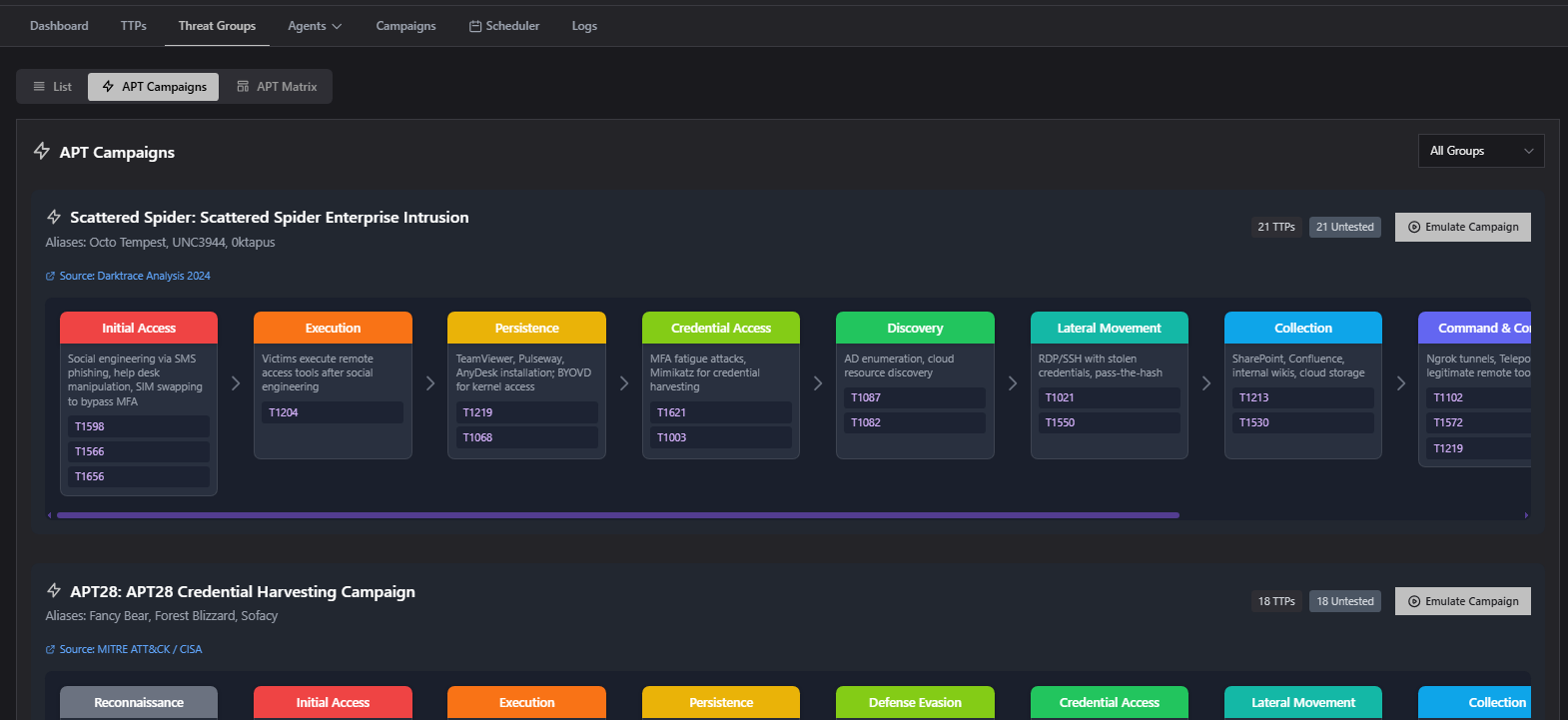
The library keeps growing with new actors and techniques as threat intelligence evolves — which is exactly the kind of content the next post is about: how techniques and packs are authored.
Next in the series
Part 6: Authoring Techniques & Packs — extend the library yourself.